Introduction
On Chain Analytics and Sentiment Signals 2026. The cryptocurrency investment landscape has undergone significant transformations by the year 2026. Early investors often relied on speculation, market sentiment, and the occasional viral trend to guide their trading decisions. However, as the industry has matured, the necessity for more sophisticated and informed strategies has become apparent. Today’s investors are increasingly turning to data-driven investment strategies, utilizing extensive data analyses and insights gleaned from blockchain activity.
Data-driven strategies have emerged as essential tools in the arsenal of modern crypto traders. Leveraging the vast amounts of information generated on the blockchain allows investors to make decisions based on quantifiable metrics rather than merely following the herd. On-chain analytics, in particular, serve to provide a clearer picture of market trends, offering insights into the behaviors of major holders, transaction volumes, and other critical indicators that can predict future price movements. DeFi cycle.
Furthermore, the integration of artificial intelligence has introduced remarkable advancements in sentiment analysis, enabling traders to assess market mood with unprecedented accuracy. By analyzing social media chatter, news articles, and community discussions, AI-powered models help investors better understand public perception and emerging trends. These tools facilitate a proactive approach to investing, allowing traders to react quickly to shifts in market sentiment.
The availability of real-time blockchain intelligence fundamentally shifts how investment choices are made. Where passive investment strategies once predominantly prevailed, data analysis fosters a more active and strategic approach. This has resulted in smarter investment strategies and more consistent profits for those who leverage these emerging technologies effectively. As we delve further into the evolution of crypto investment, it becomes clear that the future lies in harnessing the power of data and analytics to predict and respond to market dynamics.
What is On-Chain Analytics?
On-chain analytics constitutes a pivotal element in the realm of cryptocurrency trading, especially as we approach 2026. It involves the meticulous examination and interpretation of the data embedded within blockchain networks. By scrutinizing this data, analysts and traders can derive crucial insights into market behaviors and investor trends, making informed decisions driven by empirical evidence. The techniques used in on-chain analytics allow for a comprehensive understanding of various market dynamics, which is fundamental in a constantly evolving space like cryptocurrency.
One of the core components of on-chain analytics is active wallet monitoring. This practice involves tracking real-time activities across wallets to assess the behavior of different market participants. By analyzing transaction volumes and wallet interactions, traders can identify patterns that may signal changes in market sentiment. Additionally, the study of exchange inflows and outflows is vital for gauging the overall health of the cryptocurrency ecosystem. High inflows to exchanges may indicate increased selling pressure, while substantial outflows often suggest that investors are opting for long-term holding positions, reflecting confidence in asset appreciation.
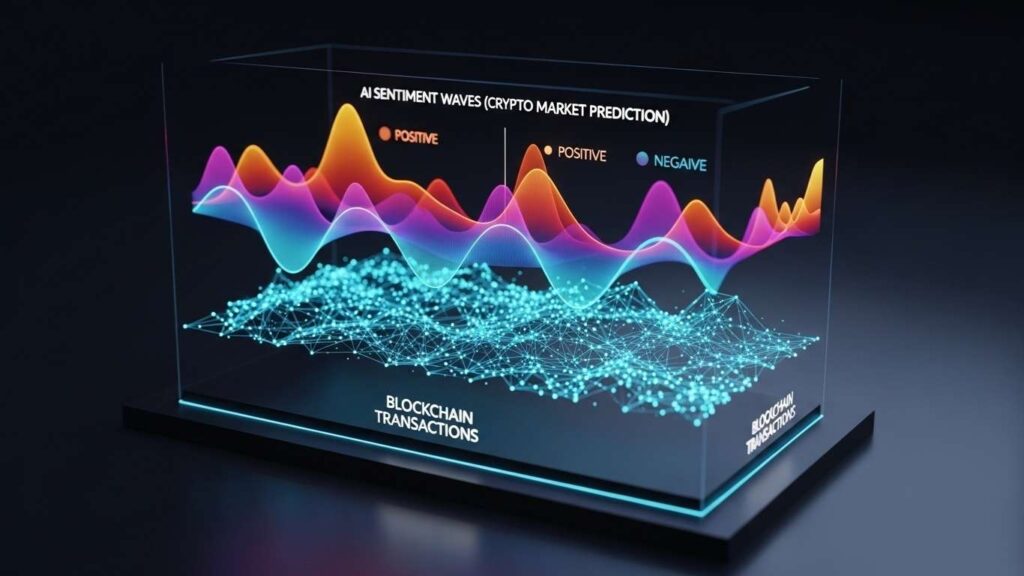
Another significant metric includes holder composition, which provides insights into the distribution of coins among various categories of investors, ranging from long-term holders to recent speculators. Understanding this composition helps in assessing market stability and potential volatility. Furthermore, liquidity distribution is crucial, as it highlights the availability of assets for trading at any given time. Together, these metrics create a deeper understanding of market dynamics, akin to observing price movements on the surface while recognizing that beneath lies a vast ocean of intricate data. This metaphor underscores the complexity that on-chain analytics seeks to unravel, establishing itself as an indispensable tool for traders navigating the future landscape of crypto trading.
The Role of Sentiment Signals
Sentiment analytics is transforming the landscape of crypto trading by serving as a vital link between investor psychology and blockchain data. In 2026, artificial intelligence (AI) models are expected to play a key role in evaluating investor sentiment by analyzing various digital platforms, including social media, online forums, and wallet activities. These analyses provide a nuanced understanding of investor confidence, emotional responses, and overall market mood, all of which are crucial when making informed trading decisions.
Leading AI tools developed for this purpose can measure market sentiment with noteworthy precision. For instance, these tools can track engagement metrics across different platforms to determine how public sentiment correlates with market trends. By assessing the volume and tone of discussions surrounding specific cryptocurrencies, investors can identify patterns that may precede significant price movements. This capability for real-time sentiment assessment ensures that traders remain informed and responsive to changing market dynamics.
Furthermore, sentiment signals are invaluable for predicting market reversals. Historical data has shown that sudden shifts in social media sentiment often precede price corrections or surges. Recognizing the emotional undercurrents driving investor behavior allows traders to adjust their strategies accordingly, acknowledging the critical influence of retail and whale investors alike. Notably, whale activities—large transactions from significant market players—can create ripples across trading platforms, and sentiment analytics can help illuminate these movements.
By employing advanced sentiment analytics, traders in 2026 will be better equipped to harness emotional metrics, monitor real momentum, and interpret changes in market sentiment effectively. Understanding these dynamics enhances their capacity for successful trading, ultimately positioning them to capitalize on emerging opportunities in the rapidly evolving world of crypto trading.
How AI Enhances On-Chain Analysis
Artificial Intelligence (AI) has played a transformative role in the realm of on-chain analytics, dramatically enhancing the capability to process and interpret extensive transaction data. Traditional methods of analysis often struggled with speed and efficiency, particularly when dealing with the complexity and volume inherent in blockchain data. AI technologies, however, offer sophisticated algorithms that can quickly sift through vast datasets, permitting traders to gain insights into market dynamics in real-time.
One of the most significant advancements brought by AI is its ability to predict token performance with remarkable accuracy. By analyzing historical transaction data, user behavior, and prevailing market conditions, AI models can identify patterns that may indicate future price movements. This predictive capability empowers traders to make data-informed decisions, allowing them to capitalize on emerging trends before they become apparent to the market at large.
Furthermore, AI enhances the detection of liquidity trends, which is crucial for executing trades effectively. By leveraging machine learning techniques, algorithms can continuously evaluate liquidity pools, identifying shifts that may suggest potential opportunities or risks. This real-time assessment leads to better timing for trades, thus improving overall performance. In addition, AI serves as a valuable tool for forecasting price movements. By integrating multiple data points and considering various factors—such as market sentiment and macroeconomic signals—AI models can offer forecasts that reflect a more nuanced understanding of market forces.
Lastly, AI enables the generation of risk scores for new contracts, providing a critical evaluation metric for traders. These scores offer insights into the potential vulnerabilities and reliability of emerging projects, facilitating more informed investment choices. According to performance metrics from Messari’s 2026 DeFi report, AI-driven analytics exhibited superior accuracy and speed compared to traditional data analysis methods, reinforcing the value of AI in enhancing on-chain analysis and optimizing crypto trading strategies.
Institutional Adoption of On-Chain Intelligence
The increasing acceptance of on-chain analytics within institutional frameworks signifies a pivotal transition in the viewpoint towards cryptocurrency. Major financial institutions have begun to recognize the potential of on-chain data as a powerful tool for enhancing transparency and improving risk management processes. This integration of blockchain intelligence has led to more informed decision-making within hedge funds, exchanges, and international regulatory bodies.
For instance, prominent entities like BlackRock and J.P. Morgan have demonstrated a keen interest in harnessing the insights derived from on-chain analytics. BlackRock, one of the world’s largest investment management firms, has started to incorporate blockchain data into its investment strategies, enhancing its capability to evaluate risks associated with cryptocurrency assets. Similarly, J.P. Morgan has established a crypto-focused division that leverages on-chain intelligence to facilitate its service offerings, including the development of their proprietary blockchain-based payment system, the Onyx network.
This shift indicates a broader trend where institutional players are moving from skepticism to strategic engagement with cryptocurrencies. The ability to analyze on-chain data allows these organizations to track transaction flows, identify potential fraud, and gauge market sentiment effectively. This level of insight is critical in a market characterized by volatility and complexity, allowing large-scale investors to navigate the landscape with a degree of confidence previously unattainable.
Furthermore, regulatory bodies are also beginning to appreciate the merits of on-chain analytics, utilizing it to enforce compliance and establish regulatory frameworks for cryptocurrencies. The transparent nature of blockchain technology allows these institutions to monitor transactions in real time, leading to enhanced oversight and governance in the blockchain ecosystem. In essence, the integration of on-chain intelligence is indeed a transformative trend that is reshaping the landscape of crypto trading, establishing a precedent for future institutional involvement in this sector.
Real-Time Use Cases of On-Chain Analytics
On-chain analytics has become an essential tool for traders looking to gain insights into blockchain networks. By leveraging real-time data, investors can make informed decisions that enhance their trading strategies. One prominent use case is whale tracking, which enables traders to monitor the activities of major investors, often referred to as “whales.” By observing transactions involving significant amounts of cryptocurrency, traders can ascertain potential market movements and adjust their strategies accordingly.
Another practical application is the analysis of smart money flows. By following the activity of top-performing wallets, traders can identify patterns in their investments. Skilled investors often showcase advanced strategies that are reflective of larger market trends. By aligning their trades with the movements of these antecedents, traders can optimize their positions, potentially increasing profitability while mitigating risks. On-chain data offers a transparent view of these advanced trading behaviors, providing a roadmap for other investors.
Moreover, liquidity health indicators are crucial in decentralized finance (DeFi) platforms. Analyzing on-chain metrics allows traders to gauge the liquidity available in various DeFi pools and projects. This capability is essential when assessing the viability of entering or exiting specific investments or protocols. A sudden drop in liquidity could signal an impending market correction; thus, awareness of these indicators enhances risk management.
Cross-chain movements are another area where on-chain analytics adds value. As various ecosystems evolve and integrate, the flow of assets across different blockchains provides insights into investor behavior. Monitoring these cross-chain transactions helps traders understand the demand and sentiment associated with various digital assets, allowing for strategic adjustments based on emerging trends.
Through these real-time applications of on-chain analytics, traders can create a ‘sentiment graph’ that assists in forecasting market trends and potential corrections. This informed decision-making, driven by live data, positions traders to capitalize on opportunities in the rapidly changing landscape of cryptocurrency trading.
The Rise of Predictive Analytics Platforms
As the landscape of cryptocurrency trading continues to evolve, predictive analytics platforms have emerged as critical tools for investors seeking to navigate the complexities of the market. These platforms leverage advanced technologies, such as artificial intelligence (AI) and neural networks, to analyze vast amounts of data and generate automated investment signals. By employing sophisticated algorithms, predictive analytics can provide insights that are both timely and actionable, thus enhancing the decision-making process for traders.
One notable example of a predictive analytics platform is IntotheBlock 2.0. This platform harnesses advanced machine learning techniques to deliver unique insights into market trends. User experiences with IntotheBlock 2.0 illustrate its effectiveness in simplifying the trading journey. The platform features intuitive dashboards that visualize key metrics, enabling users to grasp important data without the need for extensive technical expertise. The ability to access predictive signals allows traders to make informed decisions, whether they are short-term strategists or long-term investors.
The functionalities of predictive analytics extend beyond mere signal generation; they also encompass comprehensive analysis of decentralized finance (DeFi) markets. By utilizing on-chain data, these platforms can forecast future price movements, identify emerging assets, and assess liquidity conditions. The insights provided by predictive dashboards serve as crucial tools for traders, aiding them in making proactive choices in a volatile environment. The growing use of predictive analytics signifies a fundamental shift in crypto trading strategies, where data-driven insights become increasingly integral to successful investments.
In essence, the rise of predictive analytics platforms marks a transformative phase in cryptocurrency trading. Traders who harness these tools are positioned to gain a competitive advantage, enabling them to adapt more swiftly to market fluctuations and opportunities. As AI technology continues to advance, the significance of these platforms is expected to escalate, further shaping the future of crypto trading.
Challenges and Considerations Ahead
The landscape of crypto trading is rapidly evolving, underpinned by the advancements in data-driven strategies and on-chain analytics. However, as we approach 2026, several challenges must be considered to ensure that these innovations yield favorable outcomes for traders and investors alike. One predominant challenge is data privacy. With an increasing emphasis on algorithms that analyze blockchain data, concerns about how personal data is handled and protected are escalading. Regulatory frameworks are still catching up to the fast-paced nature of technology, leading to uncertainty around compliance and the ethical use of data.
Another significant consideration is the risk of over-reliance on algorithmic trading systems. While data-driven tools can enhance trading strategies by providing invaluable insights, an over-dependence on algorithms may result in adverse outcomes. Market dynamics can shift unexpectedly, and solely relying on historical data metrics may lead to erroneous predictions. Thus, it is essential for traders to combine their technical strategies with human intuition and expertise. This balance will foster a more adaptable approach, allowing for timely adjustments when the market behaves unpredictably.
Additionally, the sophistication of models used in on-chain analytics is vital. Simple models may misinterpret signals, thus providing a distorted view of market trends and potential investing opportunities. It is crucial for investors to engage models that are capable of factoring in multiple variables and are designed to adapt to changing market conditions. A continuous learning process for these models is necessary to remain relevant and impactful in the highly volatile environment of cryptocurrency trading.
As we look forward, a balanced approach—where human insight coexists with technological advancements—could mitigate some challenges and drive successful outcomes in the future of crypto trading.
Conclusion: A Data-Driven Future for Crypto Investors
The transformation of cryptocurrency investing into a data-centric discipline marks a significant evolution in how investors approach the market. With the advent of sophisticated on-chain analytics and comprehensive sentiment analysis, investors are now equipped with tools that provide deeper insights than ever before. These advancements serve not only to illuminate the underlying trends and behaviors within the crypto ecosystem but also to mitigate the inherent risks associated with market volatility.
As we look forward to 2026, it is evident that the reliance on data-driven strategies will become not only advantageous but essential for investors navigating the tumultuous landscape of digital currencies. On-chain analytics, for instance, allows for the tracking of transactions and investor activities in real-time, providing crucial information that can influence trading decisions. This heightened transparency can lead to a more informed decision-making process, enabling investors to identify potential opportunities and risks more accurately.
Furthermore, sentiment analysis plays a pivotal role in understanding market psychology, allowing investors to gauge public sentiment and its potential impact on price movements. With social media platforms and news outlets influencing investor behavior, harnessing data from these sources can provide a competitive edge in anticipating market trends. Hence, in this era characterized by rapid change, a data-driven approach enables investors to formulate smarter strategies that align with market dynamics.
Ultimately, the future of crypto trading will hinge on the ability to harness and interpret data effectively. In this new landscape, data is not merely an asset; it serves as the critical alpha driving the next generation of cryptocurrency investments. By prioritizing data analysis, investors can navigate the complexities of the crypto market with increased confidence and precision, thus setting the stage for a more robust investment environment.