Introduction
AI and Big Data in Trading 2026. As we approach the year 2026, the global trading ecosystem is poised to undergo a significant transformation driven by artificial intelligence (AI). Financial markets, which have long depended on human intuition and expertise, are increasingly integrating advanced data-driven algorithms to enhance decision-making processes. The evolution of AI technologies has significantly impacted how institutions, exchanges, and hedge funds operate, resulting in a landscape characterized by unprecedented speed, accuracy, and efficiency.
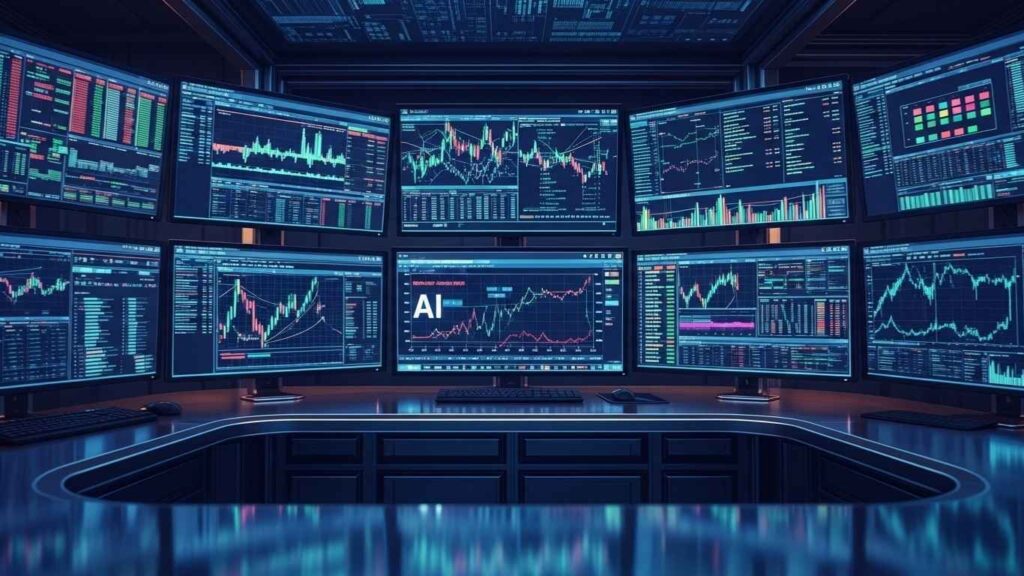
At the core of this AI-driven trading environment lies the ability of machines to analyze vast amounts of data in real-time. These sophisticated algorithms utilize machine learning techniques that allow them to identify patterns, predict market trends, and execute trades more effectively than a human trader could. This transition from traditional human-centric trading strategies to automated systems marks a paradigm shift in the way financial transactions are conducted.
In 2026, we can expect institutions to leverage AI not only for high-frequency trading but also for risk assessment and portfolio management. The implications of this transition are profound, as it leads to improved liquidity in the markets, reduced transaction costs, and enhanced overall market efficiency. Additionally, AI can aid in mitigating risks by continually monitoring market conditions and adjusting trading strategies dynamically based on evolving data inputs.
Moreover, the emergent role of AI in trading raises essential questions about the future of employment in financial markets. As automated systems gradually take over tasks once performed by humans, the need for skilled professionals in the industry may pivot towards those who can develop, manage, and refine these intelligent systems. Consequently, the workforce must adapt to this demands of a new trading paradigm where understanding AI and its applications becomes imperative.
AI: The New Brain of the Market
Artificial intelligence (AI) has rapidly transformed numerous industries and the trading ecosystem is no exception. By processing vast amounts of data from diverse sources in real-time, AI systems can identify patterns and trends that human traders may overlook. This capability allows for a deeper analysis of market dynamics, making AI an invaluable tool in financial markets. Furthermore, AI systems can execute trades with unparalleled precision, optimizing trade execution and potentially improving overall profitability.
One of the core advantages of AI in trading lies in its emotional detachment. Unlike human traders, who may be influenced by fear or greed, AI operates purely on data-driven insights. This objectivity enables AI systems to make rational decisions based on algorithms and historical data rather than impulsive reactions to market fluctuations. Consequently, the reliance on instinctive trading methods is gradually diminishing, forming a new paradigm in the trading landscape where logic prevails over emotion.
Moreover, AI technology continuously learns and adapts, enhancing its predictive capabilities over time. Through machine learning, algorithms improve their performance by analyzing past successes and failures. This continual evolution allows AI to adapt to changing market conditions, providing a significant advantage over traditional trading methods. The rise of AI-driven trading platforms marks a shift toward a more systematic approach, where traders can collaborate with algorithms to refine their strategies, thereby increasing efficiency and competitiveness.
In summary, the integration of artificial intelligence into the trading ecosystem is reshaping how market participants operate. By leveraging the strengths of AI—such as emotional neutrality and adaptability—traders are redefining their strategies and embracing a future where data-driven decisions triumph over instinctive ones. The continued advancement of AI technology ensures that its role in financial markets will only expand, fundamentally altering the fabric of trading in 2026 and beyond.
Big Data: The Fuel that Drives AI
The integration of big data into financial markets is revolutionizing the landscape of trading, providing advanced analytical capabilities that were previously unattainable. In the realm of AI-driven trading, big data serves as the essential fuel that propels algorithms and machine learning models to deliver insights that enhance trading efficacy. This data encompasses various types, including market data, alternative data, and sentiment data, all of which are crucial for developing a comprehensive understanding of market dynamics.
Market data traditionally includes a wealth of information derived from transaction history, price movements, and trading volumes. Such data empowers AI systems to recognize patterns and trends that may be imperceptible to human analysts. By leveraging this extensive dataset, AI can execute trades at optimal times and prices, significantly reducing the latency typical in human decision-making processes.
Alternative data, on the other hand, includes non-standard information sources, such as satellite images, social media activity, and news articles. These varied data types provide additional context and actionable insights, allowing traders to gauge market sentiment and consumer behavior more effectively. For instance, analyzing social media chatter about a specific stock can give traders a preliminary indication of public sentiment before market movements occur, thus giving them a competitive edge.
Furthermore, sentiment data captures the emotional tone behind market discussions and reports, providing AI systems with a nuanced perspective of market psychology. By analyzing the emotional aspects, algorithms can anticipate shifts in trading patterns based on collective investor sentiments. In combination, these diverse types of data create a substantial foundation for AI in trading, facilitating unprecedented accuracy and efficiency in market predictions.
Algorithmic Trading in Action
Algorithmic trading has revolutionized the financial markets, especially in recent years as artificial intelligence (AI) technologies have advanced. This transformation is evidenced by top financial firms that have begun to deploy sophisticated AI-powered models to execute trades with unprecedented speed and efficiency. These algorithms analyze vast amounts of market data, allowing them to make rapid and informed decisions that would be impossible for human traders to achieve at the same scale.
The evolution of trading algorithms can be traced back to simpler models that executed trades based on predefined conditions. Today, however, these systems have become incredibly complex, incorporating machine learning and neural networks to enhance their predictive capabilities. Modern algorithmic trading platforms continually learn from historical data, adapting to market conditions in real-time. This adaptability allows them not only to respond to current trends but also to foresee potential fluctuations in market behavior, which offers strategic advantages over traditional approaches.
One notable example of AI-driven algorithmic trading is the use of high-frequency trading (HFT) firms, which utilize algorithms to execute thousands of trades per second. These firms leverage AI to identify patterns and anomalies across various market segments, enabling them to capitalize on fleeting opportunities. The swift execution of trades results in substantial profit margins, which continually reinforces the effectiveness of algorithmic trading systems.
Moreover, firms employing advanced trading algorithms have demonstrated a consistent ability to outperform human-managed portfolios. Human traders, though skilled and experienced, may lack the capacity to process the extensive data necessary for making timely trading decisions. In contrast, algorithmic trading systems inherently reduce human error, ensuring that trades are executed with precision. This performance disparity highlights the pivotal role that AI is destined to play within the global trading ecosystem as it continues to evolve through 2026 and beyond.
Sentiment Intelligence and Predictive Models
In the rapidly evolving landscape of financial markets, understanding market sentiment has emerged as a crucial factor in predicting price movements and making informed trading decisions. Artificial Intelligence (AI) leverages advanced techniques like Natural Language Processing (NLP) to analyze massive volumes of textual data, extracting the emotional undertones that influence market dynamics. By examining diverse sources such as news articles, social media posts, and financial reports, AI systems can quantify market sentiment, transforming qualitative information into actionable insights.
AI-driven sentiment analysis tools focus on identifying patterns in language that indicate optimism or pessimism among investors. These insights enable traders to gauge the general mood surrounding specific assets or markets. For instance, if a significant number of tweets express bullish sentiments regarding a tech stock, AI algorithms can detect this trend and correlate it with historical price movements, potentially predicting upward momentum. Conversely, a spike in negative sentiment could indicate a prelude to price declines, prompting traders to adjust their strategies accordingly.
Furthermore, sentiment intelligence is instrumental in crafting predictive models that enhance trading outcomes. By integrating sentiment data with traditional financial metrics such as price trends and volatility, traders can develop comprehensive strategies that adapt to real-time market conditions. These models often utilize machine learning techniques to refine their predictive accuracy over time, learning from previous market behaviors and sentiment shifts. As a result, traders are better positioned to make precise calls, optimizing their entries and exits in the market.
Ultimately, the combination of sentiment intelligence and predictive modeling signifies a paradigm shift in trading strategies. Traders equipped with sophisticated AI tools can capitalize on emotional trends, allowing for more proactive and adaptive approaches in the increasingly complex global trading ecosystem.
ESG Meets AI: Smarter Sustainable Trading
The integration of artificial intelligence (AI) into financial markets has ushered in a new era of smarter, sustainable trading strategies, aligning closely with the principles of environmental, social, and governance (ESG) investing. AI-driven models are revolutionizing the assessment of ESG performance by enabling more efficient data processing and insightful analysis of diverse information sources. This advancement allows investors to evaluate companies not just on financial metrics but also on their ESG commitments.
As sustainable investing gains momentum, the demand for robust ESG evaluations is at an all-time high. AI algorithms can analyze vast amounts of unstructured data, such as news articles, social media sentiment, and public disclosures, providing a more comprehensive view of a company’s sustainability practices. Through natural language processing and machine learning, these intelligent systems can identify patterns and predict potential risks and opportunities related to ESG factors, ensuring that investors make informed decisions grounded in sustainability.
The financial benefits of incorporating ESG criteria into trading strategies have become increasingly evident. Companies prioritizing ESG factors often experience enhanced operational efficiencies, reduced costs, and improved risk management. Moreover, with growing consumer preference for socially responsible businesses, these companies are generally more resilient to market fluctuations. AI-based analyses further enrich this narrative by helping investors identify long-term value in sustainable practices, leading to potentially higher returns and lower volatility.
In conclusion, the collaboration between AI technology and ESG investing is reshaping the financial landscape. As investors prioritize sustainability, AI serves as a critical tool in identifying and supporting companies that strive for better social and environmental outcomes. This synergy not only enhances trading strategies but also fosters a broader commitment to responsible investing, ultimately contributing to a more sustainable global economy.
Risks and Regulation in AI Trading
The integration of artificial intelligence (AI) into financial markets has brought numerous advancements, yet it also introduces various risks that warrant serious consideration. One notable risk is the potential for flash crashes, which are sudden and severe drops in market prices. These occurrences can be triggered by algorithms acting on erroneous data or misinterpreting market signals, leading to rapid sell-offs and exacerbating market instability. The speed at which AI systems operate may outpace human oversight, resulting in unintended consequences that could impact trading efficacy and investor confidence.
Data bias is another significant concern in AI trading. Algorithms rely on historical data to make decisions; however, if this data is flawed or skewed, the AI can produce misleading recommendations. Bias in data can result from a lack of diverse inputs or reflective of systemic issues present in the market. When these biased decisions proliferate across trading platforms, they may perpetuate existing inequalities and biases, ultimately leading to a distorted view of market movements and valuation.
Algorithmic manipulation is an additional risk that manifests when traders exploit AI-driven systems to influence market prices deliberately. This can occur through practices such as quote stuffing, where a trader floods the market with orders to confuse or manipulate pricing. Such tactics undermine the integrity of financial markets and can have severe repercussions for investors who depend on fair price discovery.
To counteract these risks, regulatory bodies are developing and implementing measures aimed at ensuring safer trading practices. Regulations are evolving to include stringent standards for algorithm testing, transparency in data usage, and ethical guidelines for AI deployment. By fostering a regulatory framework that addresses the risks associated with AI trading, market stability can be maintained while maximizing the benefits that AI technologies bring to the financial ecosystem.
The Future of AI Trading
As we look towards 2026, the landscape of AI trading is poised for transformative change. Innovations in artificial intelligence are expected to play a pivotal role in the management of financial assets, reshaping how traders analyze data and make decisions. In the years leading up to 2026, the integration of AI-driven algorithms into trading strategies will allow for the processing of vast datasets at unprecedented speeds. This enhanced capability will enable traders to gain insights that were previously unattainable, leading to more informed decision-making and optimized investment strategies.
Moreover, the advent of quantum computing is set to revolutionize AI trading further. By harnessing the principles of quantum mechanics, this technology promises to exponentially increase computational power, allowing for complex problem-solving that traditional computers cannot achieve. Quantum algorithms will likely enhance machine learning models, leading to more accurate predictions and strategic planning in asset management. This synergy between AI and quantum computing will not only improve the efficiency of trades but also enable real-time risk assessment and portfolio optimization.
The evolving relationship between traders and AI signifies a move towards collaboration rather than competition. In the future, traders will leverage AI as an indispensable tool to enhance their trading acumen rather than as a replacement for human expertise. By partnering with AI systems, traders can focus on strategic decision-making while AI handles routine analytics, thus empowering them to pursue innovative strategies that were once thought to be inconceivable. This collaboration will redefine the nature of investment strategies, as traders will increasingly depend on AI to navigate complex market dynamics and identify investment opportunities with precision.
Conclusion: The Intelligent Ecosystem of 2026
As we look towards 2026, the global trading ecosystem stands on the brink of a significant transformation, primarily driven by the advancements in artificial intelligence (AI) and big data analytics. These technologies have the potential to reshape financial markets, establishing intelligent systems that not only enhance trading efficiency but also adapt to changing market conditions in real-time. The integration of AI into trading strategies leads to improved decision-making, reduced risks, and optimized returns.
AI empowers traders to analyze vast datasets at unprecedented speeds, extracting meaningful insights that were previously unattainable. With the ability to process real-time data, AI systems can identify patterns and trends that human traders may overlook, thereby enhancing market prediction capabilities. This shift toward data-driven decision-making fosters an ecosystem that values speed and accuracy, making traditional methods increasingly obsolete.
Moreover, the relationship between humans and machines is evolving within this intelligent trading landscape. While humans bring essential creativity, intuition, and ethical considerations to the financial markets, AI systems enhance these human capabilities by providing critical data assistance. The collaborative model promotes a synergistic interplay, where traders can leverage technological tools to complement their expertise. This collaboration encourages more strategic trading approaches and creates opportunities for innovation in financial products and services.
Ultimately, the global trading ecosystem of 2026 will be characterized by its adaptive and intelligent nature, harnessing the power of AI and big data to redefine the dynamics of investing. As market participants increasingly integrate these technologies, they will not only improve their competitive edge but also pave the way for a more efficient and transparent financial system. The future of trading promises a seamless integration of artificial intelligence, transforming the landscape into an environment conducive to growth and sustainability.