
Introduction
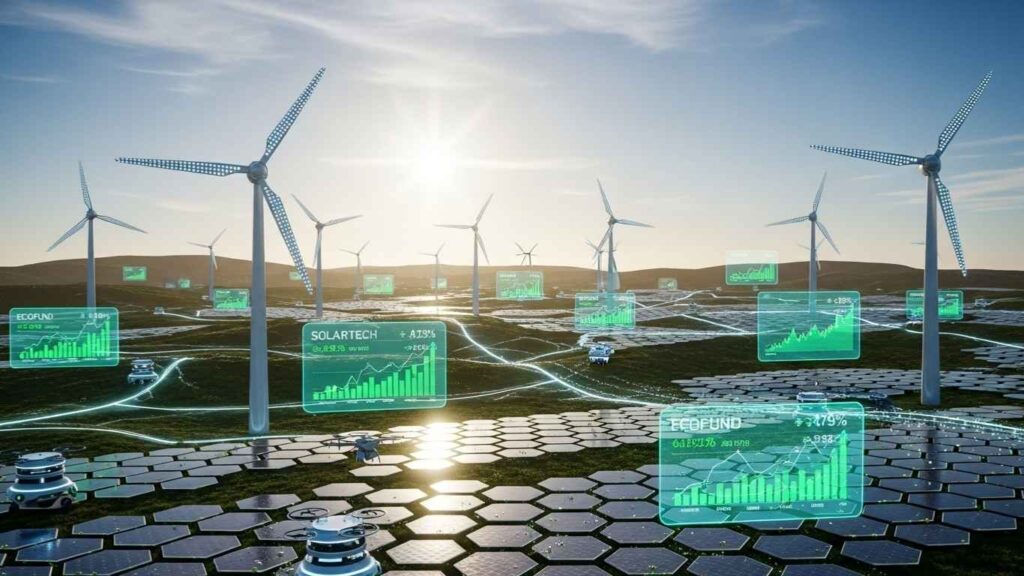
Green Energy Stocks 2026. As we progress through 2026, the global energy landscape is undergoing a profound transformation, firmly establishing the energy transition as a critical component of economic dynamics rather than a distant ambition. The shift towards green energy has gained unparalleled momentum, manifesting not only in policy frameworks and societal norms but also in the financial markets that drive investment decisions across the globe. Green energy stocks are now at the forefront of investment strategies, indicating a significant pivot towards sustainable alternatives in an effort to address climate change and promote environmental responsibility.
The growing recognition of clean energy as a viable economic driver is reshaping financial landscapes, leading institutional investors, corporations, and retail investors alike to prioritize sustainability in their portfolios. This trend marks a collective acknowledgment of the potential for green energy technologies—such as solar, wind, and hydroelectric power—to contribute to both ecological well-being and substantial financial returns. In 2026, leading companies involved in renewable energy are redefining their roles in the global market, leveraging innovative technologies and business models that underscore their commitment to sustainability while also meeting the rising energy demands of consumers.
As businesses and governments across the world invest heavily in renewable energy infrastructure, clean energy is emerging as not just an environmental necessity but also a monumental financial opportunity. This transformative shift signifies a new age of investment where market participants are increasingly aligning their financial ambitions with the imperatives of sustainability. The result is a robust ecosystem wherein green energy initiatives can thrive, offering not only a path toward a more sustainable future but also compelling prospects for economic growth and profitability.
The Rise of Renewable Power
As of 2026, renewable energy has solidified its position as a dominant force in global power generation, accounting for over 45% of total electricity production worldwide. This significant milestone is a reflection of the intensified commitment by major economies to achieve net-zero emissions by 2050. Countries such as the United States, China, and members of the European Union have pledged ambitious targets, establishing frameworks aimed at substantially reducing carbon footprints and transitioning towards sustainable energy sources.
In particular, the surge in demand for solar and wind power has transformed the energy landscape. The International Renewable Energy Agency (IRENA) reports that solar energy capacity grew by over 50% in merely one year, while wind energy saw similar growth trajectories. This shift towards renewable sources is bolstered by technological advancements that have enhanced efficiency and reduced costs, making solar panels and wind turbines not only environmentally favorable but also economically viable.
Moreover, the growth of battery infrastructure plays a critical role in this transition, as energy storage becomes paramount for stabilizing power supply and facilitating the widespread adoption of intermittent renewable sources. Governments and corporations have recognized the importance of investing in robust battery technologies, leading to massive financial allocations and venture capital influx into research and development. According to recent estimates, global investments into renewable energy technologies exceeded $500 billion, reflecting a strong commitment from both public and private sectors to capitalize on the green energy revolution.
This concentration of resources and the urgent push towards renewable infrastructure demonstrate how deeply intertwined energy goals have become with financial strategies. The interdependence of ambitious net-zero targets and renewable power’s prominence signifies a significant transformation in the global investment landscape, ensuring that clean energy not only drives environmental benefits but also fosters economic growth.
Key Drivers of Green Energy Growth
The green energy sector is experiencing a substantial transformation characterized by various critical factors that propel its growth. One of the foremost drivers is the implementation of government policies aimed at fostering renewable energy solutions. Policymakers across the globe have begun to recognize the urgency of addressing climate change, leading to substantial investments in green technologies and incentives that promote clean energy initiatives. These policies often take the form of tax credits, subsidies, and favorable regulations that enhance the economic viability of renewable energy projects.
Moreover, corporate commitments to achieving net-zero emissions have further catalyzed the shift towards green energy. Major corporations are increasingly acknowledging their environmental responsibilities and are setting ambitious sustainability goals. These commitments not only reduce the carbon footprint of companies but also clear the pathway for green energy projects, fostering a dynamic market for renewable energy solutions. By integrating renewable technologies into their operations, businesses are contributing to the overall demand for green energy, thereby signaling a strong shift within the investment landscape.
Advancements in artificial intelligence (AI) also play a pivotal role in fostering the growth of the green energy sector. AI technologies improve the efficiency and effectiveness of energy management systems, providing real-time analytics that optimize energy consumption and generation. By using AI algorithms, companies can better predict energy demand and minimize waste, leading to increased adoption of sustainable practices within the energy sector.
Furthermore, there is an escalating interest from environmental, social, and governance (ESG) investors and impact investors, eager to allocate capital for projects aligned with sustainable development goals. This growing focus on responsible investment is prompting businesses to innovate in creating green solutions that not only deliver economic returns but also promote social and environmental responsibility. The convergence of these factors creates an environment ripe for transformative growth in green energy, driving it to the forefront of global markets.
Top Performing Green Energy Stocks in 2026
The green energy sector has witnessed remarkable growth, with several companies leading the charge in 2026. Among these, NextEra Energy has emerged as a front-runner. As a key player in the renewable energy landscape, NextEra has diversified its portfolio to include wind and solar power generation, enabling it to harness the advantages of sustainable energy. This strategic positioning has allowed the company to outperform traditional fossil fuel investments, significantly enhancing its market performance.
In addition to NextEra, Enphase Energy has made notable strides within the solar energy segment. Known for its cutting-edge microinverter technology, Enphase has revolutionized the way solar energy is captured and converted, leading to increased efficiency and returns for investors. The company’s commitment to innovative solutions has not only strengthened its market standing but also contributed to the broader adoption of solar energy. Enphase’s robust financial performance reflects a shift in consumer preferences towards more sustainable energy sources.
Ørsted, a leading global player in offshore wind energy, has consistently expanded its footprint. The company’s aggressive investments in renewable projects have established it as a dominant force in the market. Ørsted’s focus on innovation and sustainability has translated into solid financial returns, positioning the firm as a clear alternative to conventional energy companies. As governments around the world continue to implement policies that favor green energy, Ørsted stands to benefit significantly in the coming years.
Another significant name in the sector is Plug Power, which specializes in hydrogen fuel cell technology. Its innovative products have garnered considerable attention and investment, particularly as hydrogen is poised to play a critical role in the future of clean energy. The strong performance of Plug Power reflects the growing investor confidence in alternative energy solutions.
These companies not only exemplify the potential of green energy investments but also highlight the shifting dynamics of the global market, where traditional fossil fuels are gradually losing prominence.
How AI and Technology are Transforming the Sector
The advent of artificial intelligence (AI) and advanced technology is revolutionizing the renewable energy sector, yielding remarkable improvements in operational efficiencies and sustainability. AI’s integration into energy management systems is enabling more effective optimization of energy grids. By leveraging data from various sources, AI algorithms can predict demand fluctuations and adjust the energy distribution accordingly, reducing wastage and ensuring that renewable energy sources are used to their full potential. This intelligent distribution system minimizes reliance on fossil fuels, further supporting the green energy initiative.
Moreover, AI enhances operational efficiencies through predictive maintenance, which is crucial for the longevity of renewable energy installations such as wind turbines and solar panels. Incorporating AI-driven analytics allows operators to foresee potential equipment failures before they occur, thereby reducing downtime and maintenance costs. This proactive approach not only contributes to improved performance but also supports overall system reliability, fostering investor confidence in renewable projects.
Another significant aspect of AI’s transformative capacity lies in its ability to improve demand forecasting. Traditional methods often struggle to account for the variability inherent in renewable sources, such as solar and wind. AI addresses this challenge by utilizing vast datasets, including weather patterns and historical consumption trends, to deliver more accurate predictions. Enhanced demand forecasting leads to more efficient energy production planning, ensuring that energy supply is closely aligned with consumption patterns.
In summary, the impact of AI and technology on the renewable energy sector is profound and multi-faceted. By optimizing energy grids, enabling predictive maintenance, and improving demand forecasting, these technologies are not only enhancing profitability but also promoting sustainability. As we look toward the future, the continued integration of AI within green energy initiatives will inevitably play a pivotal role in shaping a more sustainable energy landscape globally.
Investor Sentiment and Market Trends
The investor sentiment towards green energy has undergone a significant transformation in recent years, largely due to increased awareness of climate change and the pressing need for sustainable development. In 2026, this sentiment is now skewed heavily in favor of green energy, with investors actively seeking opportunities within the renewable energy sector. A burgeoning volume of capital is flowing into renewable energy exchange-traded funds (ETFs), which are seen as an effective vehicle for diversifying investments while supporting environmental goals.
Recent market trends have demonstrated a clear shift toward industries such as solar and wind energy, electric vehicles, and battery storage technologies. These segments not only promise sustainable and environmentally friendly solutions but also present robust growth potential. Investors are increasingly recognizing that green energy is no longer just a moral choice; rather, it constitutes a viable strategy for long-term financial gains. The resilience of renewable energy stocks during economic fluctuations further reinforces this perspective, prompting more stakeholders to view these assets favorably.
Institutional investors, in particular, are leading the charge. Large pension funds and asset management firms have allocated a significant portion of their portfolios to renewable energy stocks, reflecting a broader commitment to sustainability and responsible investing. This alignment with environmental, social, and governance (ESG) criteria is reshaping investment strategies, as long-term investors are increasingly aware that companies focused on sustainability are likely to outperform their traditional counterparts in the coming years.
Moreover, innovative technologies in the green energy sector are attracting venture capital and private equity investments. A proliferation of startups working on advanced renewable solutions has captured investor interest, paving the way for a new era of disruptive innovations that will shape the energy landscape. Overall, the sentiment towards green energy is characterized by optimism and confidence, making it a dominant force in global markets as we progress through 2026.
Challenges Facing Green Energy Stocks
The green energy sector, while exhibiting remarkable growth and resilience, is currently experiencing several immediate challenges that could impact its trajectory in the short term. One of the primary hurdles is the supply chain disruptions that have emerged due to various global events, including geopolitical tensions and the lingering effects of the COVID-19 pandemic. These disruptions can lead to delays in production and increased costs for materials essential to renewable energy projects, such as solar panels and wind turbines. Consequently, these factors could dampen investor confidence and create volatility within green energy stocks.
Additionally, the rise in interest rates has introduced another layer of complexity for investors in the green energy market. As central banks around the world tighten monetary policies to combat inflation, the cost of borrowing increases. This situation poses a challenge for companies in the green energy sector that often rely on financing for developing new projects and expanding their operations. Higher interest rates can lead to reduced investment in innovative technologies and may also impact the profitability of existing projects, which, in turn, influences market perceptions of green energy stocks.
Lastly, policy delays continue to be a significant concern. Government support plays a critical role in the growth of the green energy sector through subsidies, tax incentives, and regulatory frameworks. However, in many regions, policies are either slow to evolve or face opposition, resulting in uncertainty for investors and companies alike. Prolonged delays in policy implementation can hinder the acceleration of renewable energy projects, making it challenging for stakeholders to navigate the market effectively.
Despite these transient challenges, it is important to note that they do not signify inherent weaknesses in the green energy sector. Historical trends suggest a robust recovery and adaptation in the face of adversity, reaffirming the long-term potential of investments in this transformative market.
Regional Outlook for 2026
As the world progresses towards a more sustainable future, the regional landscape for green energy investment is rapidly evolving. In 2026, North America stands out as a prominent player in the renewable energy sector. The United States is projected to significantly increase its investment in solar and wind energy, bolstered by supportive government policies and a shift in public opinion favoring green energy. This trend is expected to lead to enhanced project advancements, particularly in states like Texas and California, where substantial resources have already been allocated to renewable energy infrastructure.
Meanwhile, Europe continues to lead the charge in green energy initiatives. The European Union’s ambitious climate targets and commitment to reducing carbon emissions by 55% by 2030 have spurred a wave of investments in wind, solar, and hydroelectric projects. Countries such as Germany, Denmark, and Spain are expected to increase their contributions to global renewable capacity, leveraging advanced technologies and innovative financing models. The region is also fostering cooperation between governments and private sectors to create a robust green energy market.
The Asia-Pacific region is witnessing a remarkable transformation as well, with countries like China and India at the forefront. China remains the world’s largest investor in renewable energy, with substantial funding directed towards solar panels and wind farm installations. The government’s push for a green transition is expected to enhance energy access and sustainability across urban and rural areas alike. India, with its rapid economic growth, is also multiplying its investments in renewable technologies to address its energy demands while mitigating environmental impacts. This concerted effort across regions will collectively contribute to an unprecedented increase in global renewable capacity between 2025 and 2027.
The Future of Green Energy Investing
As we look towards 2030, the landscape of renewable energy investing is poised for significant transformation. The increasing urgency to address climate change combined with technological advancements suggests a promising horizon for green investments. Among the most compelling trends expected to reshape the capital flows in this sector are blockchain integration, tokenized carbon credits, and innovative energy storage solutions. These developments are likely to alter not only how investments are made but also how society engages with clean energy.
Blockchain technology has the potential to revolutionize the green energy market by enabling a more transparent and efficient trading mechanism for renewable energy credits. By creating decentralized platforms, blockchain can facilitate peer-to-peer energy trading, allowing individuals to buy and sell surplus energy directly. This engagement not only empowers consumers but also incentivizes the production of renewable energy, significantly contributing to a more decentralized energy landscape.
The concept of tokenized carbon credits is another pivotal development that could influence green energy investments. By transforming carbon credits into digital tokens, companies and individuals can trade these assets in real-time, ensuring a more dynamic market. This system promotes sustainability and provides clear financial incentives for reducing carbon footprints. The increased liquidity of carbon credits could attract more investors, further driving capital into renewable energy projects.
Innovative energy storage solutions are also gaining traction, with advancements such as solid-state batteries and large-scale energy storage systems enabling better management of renewable resources. As energy generation becomes more intermittent, these technologies ensure that renewable energy can be stored and utilized efficiently. This integration ultimately provides a more reliable energy supply, bolstering investor confidence in renewable projects.
The future of green energy investing appears bright, marked by emerging technologies and new market dynamics that promote sustainability and societal engagement with clean energy. By 2030, these transformations may very well redefine the investment landscape, positioning green energy as a dominant force in global markets.
Conclusion
As we have explored throughout this blog post, the transformation of investment landscapes has been significantly influenced by the rise of green energy. In 2026, it has become evident that green energy stocks stand out as some of the most promising investment opportunities available. Numerous factors contribute to this shift, including the increasing global emphasis on sustainability, technological advancements in renewable energy production, and supportive legislative frameworks promoting eco-friendly initiatives. These elements have collectively generated an environment where investors are not only drawn to potential financial returns but also to the broader goal of supporting environmental sustainability.
The pursuit of sustainable investments aligns seamlessly with changing consumer preferences, as individuals and corporations alike prioritize eco-conscious practices. This alignment enhances the attractiveness of green energy investments, providing investors with an opportunity to participate in a movement that is reshaping our economic system. Furthermore, the long-term outlook for green energy remains robust, suggesting that the transition towards renewable sources will continue to gain momentum in the coming years. Such financial prospects underscore the value of aligning investment portfolios with sustainable trends.
By prioritizing green energy in investment strategies, individuals can contribute to environmental objectives while simultaneously positioning themselves for long-term financial success. The evidence is clear: the future of investment is green, and those who embrace this transformation stand to reap the benefits of a rapidly evolving market. As we look forward to the continued rise of renewable energy, the importance of understanding and acting upon these investment trends cannot be overstated.