
Introduction
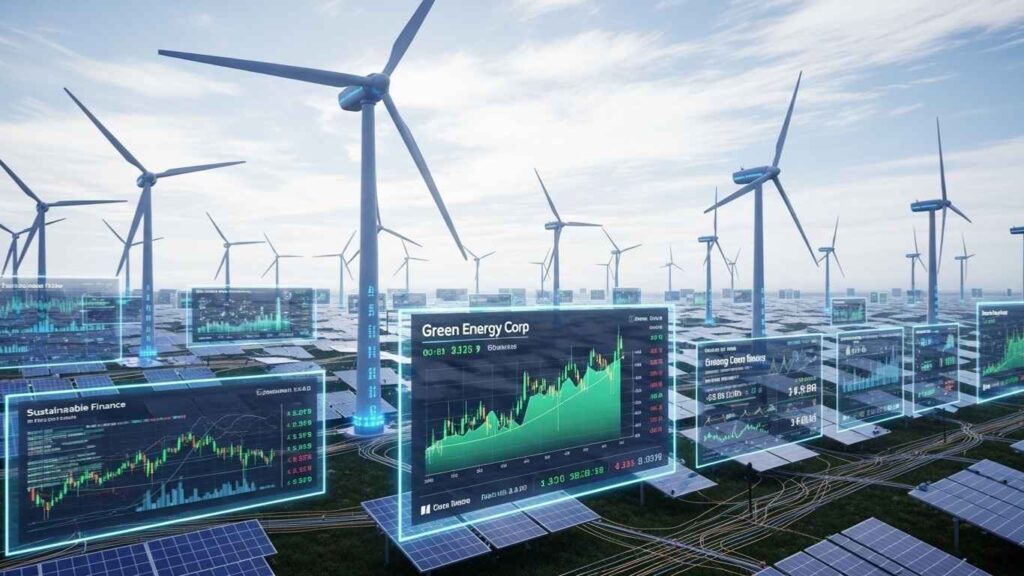
Green Energy Stock 2026. In 2026, the global financial landscape is experiencing a profound transformation driven by the shift towards green energy. This movement marks a significant departure from traditional energy sources, positioning renewable energy as a core element of economic growth across various sectors. As governments worldwide implement policies aimed at reducing carbon emissions and combating climate change, the impact on financial markets has been remarkable. Investment in renewable energy technologies has transitioned from a visionary concept into an essential component for long-term financial viability.
The relevance of green energy stocks has become increasingly pronounced, as investors are now more cognizant of the environmental, social, and governance (ESG) factors that influence corporate performance. In this emerging scenario, companies dedicated to sustainable practices and renewable energy solutions attract greater interest from investors looking to support initiatives that promote environmental stewardship. Notably, the growth of green bonds and eco-friendly investment funds underscores the rising trend of sustainable finance, providing investors with diverse vehicles to support the green economy.
The transition to renewable energy is not merely an environmental necessity; it is also becoming a pragmatic financial strategy. Forward-thinking investors recognize the potential returns associated with green energy and its supporting infrastructure, positioning themselves to capitalize on a rapidly evolving market. The integration of green energy into mainstream investment portfolios signifies the broad acceptance of sustainable practices as not just a moral imperative but a viable business model that can lead to considerable financial opportunities.
As we delve deeper into the implications of this green energy revolution on financial markets, it is essential to understand the various factors that are propelling this shift. The convergence of technological advancements, regulatory frameworks, and changing consumer preferences is reshaping investment priorities, placing green energy at the forefront of economic discussions in 2026.
The Rise of Renewable Power
The global energy landscape is undergoing a significant transformation as renewable power sources gain an increasingly dominant role. According to the International Energy Agency (IEA), renewable energy constituted approximately 29% of global electricity generation in 2021, and projections indicate that this figure could reach 35% by 2026. This shift is driven by a unified commitment from numerous governments and industries worldwide to reduce carbon emissions and shift towards sustainable energy practices.
Major economies like the United States, China, and the European Union are at the forefront of this green energy revolution. For instance, China has invested roughly $470 billion in renewable energy infrastructure in recent years, solidifying its status as the world’s leading producer of solar and wind power. The United States has also seen a rise in renewable energy usage, with the Biden administration aiming for a target of 100% clean electricity by the year 2035. Additionally, many nations within the European Union have implemented aggressive policies to enhance their renewable energy portfolios, ensuring that countries like Germany and Sweden are models of sustainable energy practices.
The massive demand for clean energy is further evidenced by the increasing investment in solar and wind technologies. The IEA reported that global solar capacity alone grew by a remarkable 20% in 2021, indicating a robust trend towards cleaner power generation methods. As countries strive to meet their climate goals, the importance of technological advancements and supportive policies in accelerating the adoption of renewable sources cannot be overstated. In addressing issues such as energy security and sustainability, renewable power is poised to be a cornerstone of future energy frameworks, fundamentally reshaping the global financial markets associated with energy production and consumption.
Key Drivers of Green Energy Growth
The growth of green energy is driven by a confluence of several essential factors that collectively foster the transition from traditional energy sources to renewable alternatives. One of the most significant drivers is government policy. Governments across the globe are increasingly enacting regulations and incentives aimed at promoting the adoption of green technologies. These policies often include tax credits, subsidies, and strict emissions standards, which incentivize both businesses and consumers to invest in renewable energy sources such as solar, wind, and hydroelectric power.
Another important factor contributing to the growth of green energy is the rising commitment from corporations seeking to enhance their sustainability profiles. A growing number of companies are prioritizing environmental, social, and governance (ESG) criteria in their operational strategies. This commitment translates into increased investments in renewable energy infrastructure and projects aimed at reducing their carbon footprint. Corporate power purchase agreements (PPAs) for renewable energy are becoming more prevalent, which further bolsters the market for green energy solutions.
Technological advancements also play a critical role in the evolution of green energy. Innovations in energy storage, grid management, and renewable energy generation technologies have made it increasingly feasible to harness and deploy clean energy. For instance, improvements in battery technology have significantly increased the viability of solar and wind energy by enabling efficient energy storage and distribution. Moreover, smart grids enhance the management of energy resources, facilitating greater integration of renewables into existing energy systems.
Lastly, the trend of significant investment in green energy cannot be overlooked. While institutional and private investors increasingly recognize the potential long-term financial returns associated with renewable energy projects, they also acknowledge the growing global demand for clean energy solutions. This influx of capital is crucial in accelerating the development and deployment of green energy technologies.
Top Performing Green Energy Stocks in 2026
The green energy sector has seen significant advancements in recent years, establishing itself as a crucial component of the global economy. As we analyze the top performing green energy stocks in 2026, several key players emerge as leaders, each displaying unique competitive advantages that position them for sustained growth.
One notable stock is Solara Technologies, a pioneer in solar energy solutions. The company has consistently increased its market share by introducing innovative products that are both efficient and economically viable. In 2026, Solara’s new photovoltaic technology has enhanced energy conversion rates, setting a benchmark within the industry. This technological advancement, combined with strategic partnerships, has allowed Solara to penetrate emerging markets effectively.
Another leading stock in the green energy space is WindStream Corp. Specializing in onshore and offshore wind energy projects, WindStream has expanded its operations significantly, securing government contracts in multiple countries. Its competitive edge lies in its commitment to sustainability and community engagement. This approach has not only strengthened its brand but also fostered a loyal customer base, ensuring consistent revenue growth.
Additionally, HydroGreen Innovations has made remarkable progress in harnessing hydroelectric power. The company has invested heavily in research and development, resulting in cutting-edge turbine technologies that minimize environmental impact while maximizing output efficiency. With a focus on regulatory compliance and sustainable practices, HydroGreen has positioned itself as a trusted leader in the renewable energy sector.
Finally, BioEnergy Solutions is revolutionizing the biofuel industry with its advanced waste-to-energy technologies. Their innovative process not only reduces waste but also produces sustainable energy, creating a dual benefit for both the environment and investors. With increasing demand for cleaner energy sources, BioEnergy’s market potential continues to expand.
In conclusion, the green energy stocks mentioned not only demonstrate strong market performance but also highlight the innovative approaches that contribute to their growth. Investors looking to capitalize on the sustainability trend in 2026 should consider these leading companies as they embody the profitability potential of the green energy revolution.
How AI and Technology Are Transforming the Sector
The integration of artificial intelligence (AI) and advanced technology is fundamentally reshaping the renewable energy landscape. As the Green Energy Revolution gains momentum, these innovations are not only enhancing operational efficiencies but are also enabling significant advancements in demand forecasting and real-time energy management. By leveraging machine learning algorithms, energy providers can analyze vast amounts of data from diverse sources, leading to improved decision-making processes and optimized energy distribution.
One prominent application of AI in the renewable sector is in predictive analytics, which allows organizations to anticipate energy demand fluctuations. This capability is critical, especially as the popularity of renewable sources like solar and wind continues to rise, given their inherent intermittency. AI-driven systems can assess historical consumption patterns and weather data to generate accurate demand forecasts, thereby minimizing waste and maximizing resource allocation. This approach not only helps in maintaining equilibrium between supply and demand but also enhances the profitability of clean energy solutions.
Moreover, real-time energy management tools powered by AI enable energy producers to monitor and control their systems with phenomenal precision. By utilizing IoT devices and smart meters, operators can gain insights into energy usage patterns, enabling them to fine-tune operations. Such systems can react dynamically to varying grid conditions, making minute adjustments that enhance reliability and efficiency. Furthermore, AI contributes to fault detection and maintenance prediction, reducing downtime and operational costs.
Overall, the synergistic relationship between AI, technology, and renewable energy sources is poised to create a more resilient and sustainable energy ecosystem. As firms harness these advancements, the barriers to capturing the full potential of green energy solutions are being dismantled, paving the way for a fully integrated and economically viable renewable energy sector.
Investor Sentiment and Market Trends
The investor sentiment toward green energy has witnessed a substantial evolution in recent years, driven by an increasing recognition of the urgent need for sustainable practices within financial markets. As we move into 2026, market data indicates a robust upward trajectory for environmentally friendly investments, reflecting both the urgency to transition to renewable energy sources and the potential for high returns. The prevailing sentiment among investors is that green energy projects not only present sustainable opportunities but also serve as viable avenues for substantial financial growth.
Recent statistics underscore a significant increase in capital inflow into green energy sectors, with solar energy, wind power, and battery technologies attracting the lion’s share of investments. Institutional investors, in particular, are gravitating toward these areas, viewing them as dual-purpose opportunities: they represent both a commitment to responsible investing and a pathway for portfolio diversification. This dual approach aligns with the increasing demand from stakeholders for responsible fiscal practices, which has led to strategies being designed around environmental, social, and governance (ESG) criteria.
Many institutional investors are now integrating green energy into their strategic asset allocations, reflecting a marked shift in market trends. This transition has not only been influenced by regulatory pressures and social responsibilities but also by a keen awareness of the financialized narrative surrounding green investments that have historically provided significant returns. Consequently, green energy assets are being heavily scrutinized, as investors aim to glean insights into performance metrics and growth projections that highlight their long-term viability.
Overall, the palpable shift in investor sentiment toward green energy is reshaping financial markets, signifying a clear trend where capital is increasingly allocated toward sustainable practices. The ongoing transformation reaffirms that green energy is no longer a niche investment but a prominent fixture within the broader investment landscape, promising both financial growth and a sustainable future.
Challenges Facing Green Energy Stocks
The green energy sector, while carrying immense potential for growth, is not without its challenges. Investors are increasingly aware of the various hurdles that this market segment must navigate to achieve stability and profitability. One of the primary obstacles currently affecting green energy stocks is the issue of supply chain disruptions. As the demand for renewable technologies rises, delays in the procurement of essential components, such as solar panels and wind turbines, can significantly impact production timelines and project completions.
Fiscal constraints also present a formidable challenge to green energy investments. Many companies within this sector rely heavily on capital from both public and private investments to fund research and development, as well as to maintain competitiveness. However, fluctuating economic conditions, including inflation and rising interest rates, can lead to tighter financial conditions, making it harder for green energy firms to secure necessary funding. Investors are observing these fiscal pressures closely, often adjusting their portfolios to account for increased risks associated with financial sustainability.
Moreover, regulatory delays in approving new renewable energy projects can impede progress. Each jurisdiction has its own set of regulations and permitting processes, which can lead to unnecessary waiting periods for projects that could contribute significantly to reducing carbon emissions. These regulatory challenges can dissuade investors from fully committing to green energy stocks, hesitant about potential stagnation stemming from bureaucratic inefficiencies.
Despite these challenges, it is crucial to recognize that many of these issues are temporary and do not signify a fundamental threat to the green energy sector. Investors are responding to this volatility with a mixture of caution and optimism, continuously assessing opportunities as the market evolves. Ultimately, a resilient approach towards these challenges can pave the way for long-term gains in the green energy landscape.
Regional Outlook in 2026
As the world progresses through 2026, different regions are playing crucial roles in the green energy revolution, each contributing uniquely to the global transformation of financial markets. The European Union stands out as a leader in renewable energy adoption, with ambitious policies such as the European Green Deal aimed at reducing greenhouse gas emissions significantly. By capitalizing on sources like wind, solar, and biomass, Europe is not only positioning itself for a sustainable future but also attracting substantial investments in green technologies. As a result, the financial market is witnessing a surge in green bonds and environmentally responsible investment funds.
In North America, particularly the United States, states are implementing varying energy policies aimed at boosting renewable resources. The federal government is supporting this movement through tax incentives and grants for solar and wind projects. With technological advancements driving down the costs of renewable installations, a significant shift in investment from fossil fuels to clean energy sectors is anticipated. Furthermore, the involvement of private sector players has led to innovative financing models that enhance market accessibility for renewable projects.
Asia presents a mixed landscape in green energy development. Countries like China and India are rapidly expanding their renewable infrastructures, focusing on solar and hydropower. China’s commitment to achieving carbon neutrality by 2060 is driving its investments in green technologies, creating a competitive market ripe for international partnerships. Meanwhile, India’s initiatives towards solar energy are creating opportunities for financial markets to develop green investment portfolios. In contrast, regions such as Southeast Asia may lag behind due to regulatory challenges and economic constraints, but localized initiatives do indicate a budding interest in sustainable practices.
As we take a broad view of these developments in 2026, it becomes clear that regional policies, technological advancements, and financial innovations are instrumental in shaping the evolving green energy landscape. Each region’s contributions play a pivotal role, not only enhancing their own market dynamics but also impacting global financial flows toward sustainability.
The Future of Green Energy Investing
As we approach 2026, the field of green energy investing is poised for significant transformation. The integration of emerging technologies is expected to redefine investment strategies, making the sector more attractive to a broader range of investors. One anticipated trend is the utilization of blockchain technology for carbon tracking and trading. By leveraging blockchain’s inherent transparency and security features, companies can provide more accurate and reliable data regarding their carbon emissions. This will enhance accountability and could lead to greater investor confidence in green initiatives. Additionally, blockchain can streamline the trading process of carbon credits, creating a more accessible market for investors looking to support sustainability.
Another area gaining traction is energy storage technology. As renewable energy sources like wind and solar become more prevalent, the ability to efficiently store energy is critical. Innovations in battery technology, such as solid-state batteries and grid-scale storage solutions, are expected to improve energy resilience and reliability. These advancements not only enhance the profitability of renewable projects but also create new avenues for investment in energy storage companies, which are crucial for balancing supply and demand in decentralized energy ecosystems.
The paradigm is also shifting towards a decentralized energy model, which promotes local energy generation and consumption. This approach empowers communities and businesses to invest in their renewable energy production, leading to distributed energy systems. By investing in community solar projects or local wind farms, investors can engage directly with the energy output that is being produced. This not only aligns with the growing consumer preference for sustainable practices but also presents an opportunity for financial returns that resonate with the values of ethically-minded investors.
As the green energy landscape evolves, investors must remain adaptable, exploring new technologies and investment vehicles that align with the advancing focus on sustainability and carbon reduction.
Conclusion
As we navigate through 2026, it becomes increasingly evident that green energy investments are not just a passing trend but rather a pivotal shift within the financial markets. This blog has discussed how innovations in sustainable energy sources, along with supportive governmental policies, have contributed to the robust growth of green energy stocks. These investments are positioned favorably to endure and expand, fueled by a global emphasis on sustainability and clean technology.
Investing in green energy stocks offers a multitude of promising opportunities. Beyond the potential for substantial financial returns, there is an essential component of environmental stewardship woven into these investments. By channeling capital towards renewable energy projects, investors not only stand to benefit economically but also contribute to a larger mission of combating climate change and promoting sustainable practices. Such alignment between wealth generation and ecological responsibility creates an attractive proposition for those looking to diversify their portfolios while factoring in ethical considerations.
Moreover, the current investment landscape showcases an upsurge in companies committed to green energy initiatives. This trend reflects a broader market transformation, urging investors to pay attention to environmental impacts alongside financial metrics. The potential for wealth accumulation in the green sector is further amplified by growing consumer demand for sustainable energy solutions, making it a fertile ground for investment strategies focused on long-term viability and growth.
In conclusion, the trajectories of green energy stocks illuminate a future that harmoniously connects financial prosperity with environmental responsibility. As societal values shift towards sustainable living, aligning one’s investment strategies with these ideals is not just prudent but essential for forward-thinking investors. The green energy revolution is shaping the future of finance, creating an unparalleled opportunity to influence both economic and ecological landscapes positively.