Introduction
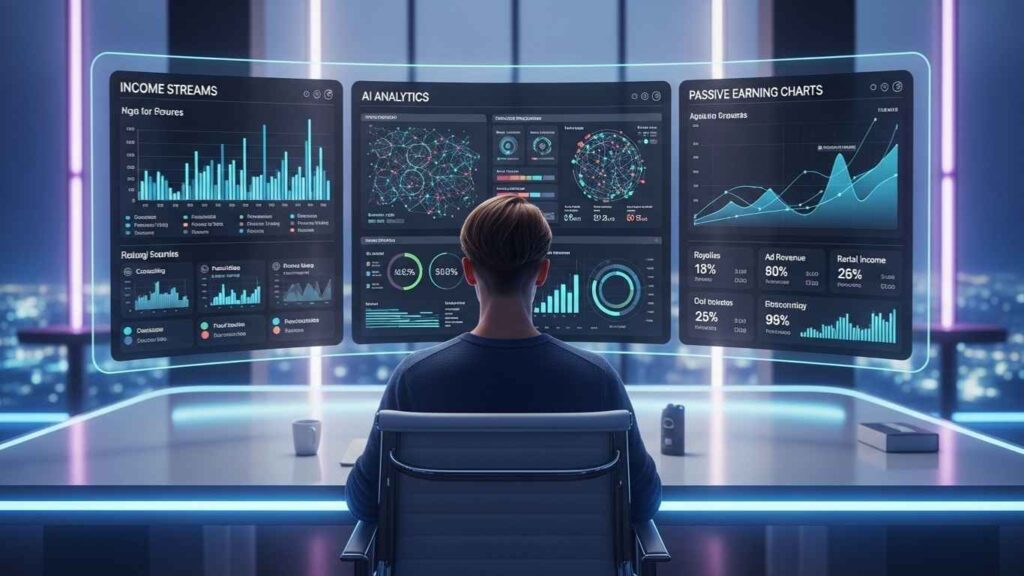
Side-Hustle Economy 2026. The concept of the side-hustle economy has gained significant traction in recent years, particularly in the wake of the global pandemic. Traditional financial stability, once largely defined by a single paycheck derived from full-time employment, has undergone a profound transformation. As individuals faced job uncertainty and economic challenges, many have turned to alternative income streams, leading to the emergence of what can be termed the multi-income revolution. This change is characterized by a growing trend where millions are blending their primary employment with various digital income opportunities.
Technology plays a pivotal role in this evolution, providing individuals with platforms to monetize skills and hobbies. From freelancing to e-commerce, the digital landscape has created a plethora of avenues for generating income outside of the traditional workplace. The convenience and accessibility of these online opportunities not only enable people to supplement their earnings but also to explore their passions in ways that were previously unattainable. Increasingly, side-hustles serve as a viable strategy for enhancing financial resilience, allowing individuals to navigate fluctuations in the job market more effectively.
This shift from reliance on a singular paycheck to embracing diversified income sources reflects a broader cultural movement toward prioritizing personal financial freedom. Growing numbers of workers recognize that having multiple revenue streams can serve as a buffer against economic uncertainty, as well as a means of achieving desired lifestyle changes. Whether it be starting an online consulting business, selling handmade products, or investing in real estate, individuals are actively engaging in the side-hustle economy to attain a more flexible and secure financial future.
Historical Evolution of the Side Hustle
The side-hustle economy has undergone significant transformation over the past decade, characterized by three distinct phases each contributing to a shift in how individuals earn money and redefine their relationship with work. The first phase, known as the gig economy boom, took place from 2018 to 2020. This period witnessed the rise of platforms facilitating short-term employment opportunities. Services such as ride-sharing, food delivery, and freelance marketplaces became increasingly popular, allowing individuals to monetize their time and skills flexibly. This newfound independence attracted many workers who sought to supplement their primary income or explore entrepreneurial ventures.
Moving into the second phase from 2020 to 2023, the global pandemic acted as a catalyst for widespread adaptation to remote work and digital freelancing. As businesses transitioned to virtual operations, employees realized the potential for productivity outside traditional office settings. Consequently, this surge in remote work led many to pursue side hustles that leveraged online resources and tools, such as e-commerce, content creation, and consulting. The pandemic not only validated the side-hustle concept but also fostered greater acceptance of diversifying income streams. Workers began to understand that with the right approach, multiple sources of income could serve as a buffer against economic uncertainties.
The current phase, from 2024 to 2026, marks the emergence of AI-driven entrepreneurship and automation. Advances in technology are enabling individuals to create and manage profitable side ventures with minimal effort. Artificial intelligence tools can assist in areas ranging from marketing automation to customer service, significantly reducing the time required for operational tasks. As automation continues to evolve, it is expected that the side-hustle economy will embrace innovative business models, allowing people to pursue their passions while generating additional income. This progression underscores a culture that not only values multiple income streams but also promotes a widespread entrepreneurial mindset among workers.
Top Side-Hustle Trends of 2026
The side-hustle economy has evolved significantly, with several key trends shaping the landscape in 2026. One of the most influential trends is AI-assisted freelancing. Through advanced algorithms and machine learning, platforms now provide freelancers with tools that enhance productivity and improve service delivery. For instance, automated project management systems and AI-driven customer engagement tools help freelancers optimize their workflows. This technology not only saves time but also enables freelancers to take on more clients, ultimately increasing their earning potential.
Another noteworthy trend is the rise of micro-entrepreneurship platforms. These platforms have democratized business ownership by allowing individuals to start small-scale ventures with minimal investment. The barrier to entry has significantly lowered, making it possible for anyone with an idea to bring it to market. These platforms often offer support in terms of marketing, logistics, and customer service, helping aspiring entrepreneurs navigate the complexities of running a business.
Tokenized income streams are also gaining traction in the side-hustle economy, facilitated by blockchain technology. This innovation allows individuals to monetize digital assets and content in new ways, creating opportunities for passive income through token economies. For example, creators can issue tokens that give holders access to exclusive content, thereby providing a new revenue stream that was previously unattainable.
Lastly, skill monetization platforms have emerged as vital resources for individuals looking to capitalize on their expertise. These platforms connect skilled professionals with clients seeking specific abilities, facilitating a direct exchange that benefits both parties. By leveraging these networks, individuals can monetize their skills, whether it be graphic design, writing, or coding, allowing them to forge a sustainable income path while maintaining flexibility in their work-life balance.
Understanding the Benefits of Multi-Income Strategies
In today’s fluctuating economic climate, the traditional reliance on a single source of income is becoming increasingly precarious. Multi-income strategies, which involve diversifying one’s revenue streams, have emerged as a vital approach to achieving financial security. This concept encompasses various income forms, from side-hustles and investments to freelance work and passive income efforts, thereby bolstering overall financial resilience.
One of the most significant advantages of having multiple income streams is risk mitigation. Dependence on a single job can lead to vulnerability in cases of layoffs, pay cuts, or unfavorable economic conditions. A study conducted by the Bureau of Labor Statistics found that individuals with more than one source of income reported feeling more secure in their financial situations. By diversifying income sources, individuals can cushion themselves against unexpected financial shocks.
Additionally, multi-income strategies facilitate wealth accumulation. Multiple revenue streams allow individuals to invest in various opportunities, accelerating their path to financial independence. For example, passive income through real estate or investments can generate substantial returns over time, ultimately increasing net worth. The practice of enhancing one’s income portfolio leads to a significantly higher overall financial satisfaction compared to those relying solely on their primary jobs.
Moreover, engaging in different income-generating activities helps diversify skills. In the process of developing multiple income channels, individuals often gain valuable expertise in various fields, improving both employability and adaptability. This diversification contributes to personal growth and can increase future earning potential in existing careers or new ventures.
Furthermore, many side-hustle opportunities provide location independence, allowing individuals to work remotely or operate online businesses. This flexibility can align work with personal priorities and lifestyles. Over time, these strategies collectively accelerate the journey towards financial independence, empowering individuals to pursue their passions and secure their financial futures.
AI and Automation: The New Backbone of Income Generation
The emergence of the side-hustle economy has been significantly bolstered by advancements in artificial intelligence (AI) and automation technologies. This transformation enables individuals to pursue additional income-generating activities alongside traditional employment, ultimately aiding in the quest for financial independence. Entrepreneurs are increasingly adopting a variety of AI-driven tools that enhance operational efficiency and productivity.
One prominent example is ChatGPT, a sophisticated AI language model that streamlines communication processes. Entrepreneurs can utilize this tool to automate customer support, engage potential clients, and generate content for marketing efforts. This capability not only saves time but also fosters a more responsive engagement with customers, ultimately contributing to business growth. By implementing ChatGPT, side-hustlers can focus on strategic decisions while the tool manages routine interactions efficiently.
Another significant tool enhancing the side-hustle economy is Canva AI. This design platform leverages AI to simplify the creation of marketing materials, presentations, and social media graphics. By using Canva AI, entrepreneurs can generate visually appealing content without requiring advanced design skills. This ease of use democratizes access to high-quality marketing assets, allowing side-hustlers to present their services and products professionally and effectively.
Moreover, the rise of smart financial tools has transformed how individuals manage their earning streams. Applications that offer real-time tracking of income, expense categorization, and automated invoicing empower entrepreneurs to maintain a clear financial overview. This data-driven approach facilitates informed decision-making, helping side-hustlers allocate resources effectively and plan for future growth.
The synergy between AI and automation stands to revolutionize the side-hustle economy, maximizing productivity while minimizing the time investment required for tasks. As individuals harness these advancements, they are better equipped to navigate their financial journey towards freedom and success.
Case Study: From Freelancer to Multi-Income Creator
Amira’s journey into the side-hustle economy exemplifies a transformative path toward financial independence. Initially a freelance designer, she began her career focusing solely on client projects, which provided a modest income but limited her financial growth. Recognizing the potential for expanding her income streams, Amira took a strategic approach to develop herself into a multi-income creator.
To facilitate this transition, Amira embraced the concept of skill stacking. She invested time in learning various related skills, such as web development and digital marketing. This diversification not only enriched her service offerings but also enhanced her marketability, allowing her to attract a broader clientele. As her skills grew, so did her confidence in exploring additional revenue opportunities.
Automation played a crucial role in Amira’s success. By employing tools like social media scheduling and client management software, she streamlined her workflow. This automation freed up significant time, enabling her to focus on building new income streams, such as creating online courses for aspiring designers. These courses leveraged her expertise and allowed her to generate revenue passively, complementing her freelance income.
Reinvestment was another key strategy in Amira’s journey. She dedicated a portion of her earnings to upgrading her skills through courses and attending workshops, ensuring she stayed ahead in a competitive market. This continual learning allowed her to offer high-value services that justified premium pricing. Furthermore, Amira reinvested in marketing strategies to expand her audience effectively, which resulted in increased visibility and clientele.
Overall, Amira’s evolution from a freelance designer to a multi-income creator highlights the essential steps for anyone navigating the side-hustle economy. By implementing skill stacking, automation, and strategic reinvestment, she not only achieved financial freedom but also established a sustainable career in a dynamic landscape.
Global Expansion of the Hustle Culture
The side-hustle economy has rapidly expanded worldwide, illustrating its ability to transcend geographical boundaries and cultural limitations. While it initially gained momentum in Western countries, this paradigm of entrepreneurial spirit is now being embraced globally, particularly in emerging economies. One notable example is India, where a notable increase in side-hustlers is attributed to the convergence of technology and a vibrant gig culture. The rise of mobile internet access, digital payment systems, and online marketplaces has empowered individuals to tap into their skills and creativity to generate additional income streams.
In numerous Indian cities, people are capitalizing on global platforms to sell handmade crafts, offer consulting services, or engage in technology-related freelance work. This movement is significantly driven by the desire for financial independence, job security, and the ability to diversify income sources. The cultural shift towards valuing multiple income streams has spurred entrepreneurial initiatives, culminating in a dynamic surge in the gig economy. Moreover, the flexibility that accompanies side-hustles enables individuals to harmonize their traditional job duties with their entrepreneurial pursuits, a concept that aligns well with the evolving work preferences in many parts of the world.
However, the global side-hustle economy is not without its challenges. Side-hustlers often face disadvantages such as limited access to financial resources, legal advisories, and market insights, particularly in developing nations. Local regulatory landscapes may also impose restrictions on gig-related activities, which can hinder growth and innovation. Despite these obstacles, international hustlers continue to find innovative solutions, utilizing technology to mitigate these challenges. This adaptability exemplifies the resilience of individuals striving for financial autonomy, promoting a more diversified and inclusive economic landscape on a global scale.
Future Outlook: What to Expect in the Side-Hustle Economy
The side-hustle economy is poised for significant transformation in the coming years, influenced by both technological advancements and shifts in societal and regulatory frameworks. One of the most critical factors fueling this evolution is the continuous progression of technology. With the advent of artificial intelligence, machine learning, and automation, individuals engaging in side-hustles will have access to tools that enhance their efficiency and productivity. This trend could lead to the emergence of sophisticated platforms that streamline processes, making it easier for freelancers and entrepreneurs to manage multiple ventures simultaneously.
Additionally, changing regulations surrounding gig work and freelancing are anticipated to play a vital role in shaping the side-hustle landscape. As governments recognize the significance of this economy for job creation and innovation, they may implement policies aimed at providing better protection and benefits for gig workers. Such regulations could include access to healthcare, retirement plans, and fair pay standards, which would fundamentally alter the dynamics of freelance work. This regulatory shift could encourage more individuals to view side-hustles as viable, long-term sources of income rather than temporary ventures.
Moreover, the cultural shift towards entrepreneurship and self-employment is expected to gain momentum. The pandemic has already instigated a reevaluation of traditional work structures, leading to a growing acceptance of flexible working arrangements. As more people seek to balance personal passions with income generation, a diverse range of side-hustle trends will likely emerge. From e-commerce to digital content creation, the variety of avenues available will empower individuals to tailor their side projects to their unique skills and interests.
To effectively navigate this evolving landscape, it is crucial for aspiring side-hustlers to stay informed about these impending developments. By understanding the interplay of technology, regulations, and cultural attitudes towards work, they can better position themselves in the ever-changing side-hustle economy.
Conclusion: Embracing the Side-Hustle Mentality
As we navigate through 2026, the side-hustle economy has established itself as a substantial facet of contemporary financial landscapes. This transformative approach to work encourages individuals to diversify their income streams, fostering a sense of financial security and autonomy. The convergence of technology and creativity plays a pivotal role in shaping these varying avenues for additional income, highlighting the necessity to adapt to this evolving paradigm.
Key takeaways from our exploration stress the essential nature of flexibility in today’s job market. Traditional employment structures are increasingly complemented—or even replaced—by entrepreneurial endeavors. The diverse skill sets individuals possess can be leveraged to create side hustles that align with personal passions and market demands. This multifaceted approach not only incites creativity but also cultivates resilience against economic fluctuations, ultimately augmenting financial stability.
Embracing the side-hustle mentality means recognizing that financial independence is achievable through a combination of innovative thinking and proactive action. The potential of digital platforms to facilitate side projects offers unparalleled opportunities for both creative expression and financial gain. Individuals are urged to engage with these resources, embracing new technologies and tools that streamline processes, thus empowering them to turn aspirations into realities.
In conclusion, venturing into the side-hustle economy is no longer a mere trend; it is a strategic approach to work that underscores the importance of adaptability in ensuring one’s financial future. We encourage readers to explore their own side-hustle possibilities, embracing the mindset of continuous learning and growth. Taking proactive steps can lead not only to enhanced earnings but also to a more fulfilling and diversified career path. The journey towards financial freedom begins with a single step—what will yours be?